Platform for Social Development
 and Innovation

UN Report validates years of community concerns in Bor and Krivelj, Calls for accountability and protection of residents
Belgrade / Bor / Krivelj / Geneva, 10 June 2026
Ahead of its presentation to the UN Human Rights Council this June, a new report by the UN Working Group on the issue of human rights and transnational corporations and other business enterprises has confirmed many of the concerns that residents of Bor, Krivelj and surrounding villages in eastern Serbia have raised for years about the impacts of mining. While documenting serious human rights and environmental concerns in the Bor district, the report warns that economic development objectives are not being adequately balanced with the protection of human rights, environmental safeguards, and the sustainable use of natural resources.
The report follows the Working Group’s official visit to Serbia from 6 to 15 October 2025, which included a field mission to the Bor district. During the visit, the experts met with communities and heard first-hand testimonies about the impacts of mining on land, water, public health and the environment.
For residents of Bor, Krivelj and neighbouring communities, the report represents important international recognition of long-standing concerns related to environmental pollution, pressure on land and water resources, uncertainty surrounding relocation, limited access to reliable environmental and health information, and the lack of effective remedies and accountability mechanisms.
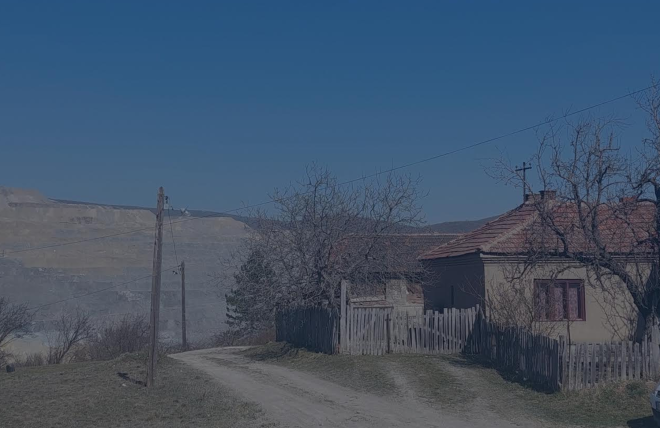
In Krivelj, the report highlights the direct human consequences of mining expansion. The Working Group observed damage to homes and land caused by blasting operations at the Veliki Krivelj mine, and expressed serious concern that further expansion could displace approximately 400 households. It also warned that relocation could result in the loss of long-standing cultural institutions that are central to the community’s social fabric, cultural identity and way of life, particularly in a district where the Vlach community already bears a disproportionate share of mining-related impacts.
Jasna Tomić, a resident of Krivelj, said: “For us in Krivelj, the UN visit meant that someone finally came to see what life next to a mine really looks like. The report confirms that our concerns about resettlement, land, water, health and the future of our villages cannot be ignored. We are not asking for special treatment - we are asking to live safely and with dignity, and for our communities to be able to remain together even if relocation becomes unavoidable. The Republic of Serbia and local authorities must address this issue without delay.”
The Working Group also identified unresolved issues concerning environmental permitting and regulatory oversight in Bor district, noting that “there is little transparency” surrounding the operations of Serbia Zijin Copper and their potential impacts on human health. It further concluded that heightened health risks, including the high incidence of cancer in Bor and the surrounding area, “can no longer be ignored by the State”.
For Toplica Marjanović, an environmental protection engineer from Bor, these findings underscore the need to treat the safeguards outlined by the Working Group as non-negotiable standards: “Mining and other extractive projects must be subject to rigorous environmental assessment, early and meaningful participation of affected communities, independent public oversight, and effective implementation of the UN Guiding Principles on Business and Human Rights. Information about their impacts on human health and the environment must be made available in a timely and accessible manner.”
The report calls on Serbian authorities to strictly enforce environmental laws without exemptions or delays and to ensure that mining operations are not approved, continued or expanded without full compliance with integrated environmental permit requirements. It further recommends suspending operations and imposing effective sanctions where companies operate without valid permits or exceed legally established emission limits.
The Working Group also calls for reliable, up-to-date and independent environmental monitoring, comprehensive health impact assessments and continuous public health surveillance. In cases involving land acquisition, expropriation or relocation, it stresses that no early possession or forced displacement should occur until all legal safeguards have been respected, affected communities have meaningfully participated in decision-making processes and adequate compensation has been provided.
Hristina Vojvodić, Senior Legal Advisor at CORE, stated: “This report should not be viewed as symbolic recognition. It must serve as a basis for concrete institutional action. Its findings are a warning that development cannot be built on weak institutions, hidden risks, or communities left to bear the consequences. No project should move forward unless it is lawful, transparent, independently monitored and fully accountable to the people whose lives, health and environment it affects.”
The publication of the report marks an important turning point. Its findings place renewed responsibility on both Serbian authorities and mining companies to publicly address the concerns raised and to implement concrete measures to prevent and remedy environmental, health and human rights impacts.
Strong national enforcement remains essential. However, domestic legal frameworks alone cannot protect communities when transnational corporations operate across jurisdictions, shift liabilities through complex corporate structures, and exploit regulatory gaps to avoid accountability.
Yifang Tang of FIAN International said: “For too long, corporations have polluted ecosystems, displaced communities and caused harm without consequence. Voluntary standards are not enough. We need a strong and effective UN Binding Treaty that establishes joint and several liability across global value chains, ensuring that corporate profits never come before human rights and that corporate harm never goes unaddressed”.
Residents of Bor, Krivelj and surrounding communities, together with partner organisations including CORE and FIAN International, will continue pursuing accountability through national and international mechanisms until effective remedies, transparency and the protection of human rights are fully secured.