Platform for Social Development
and Innovation

Industrial pollution in Serbia: Does the new law protect public health or polluters?
Today marks the final day of the public consultation on the Draft Law on Integrated Pollution Prevention and Control, legislation that should serve as a key instrument for reducing industrial pollution and protecting public health.
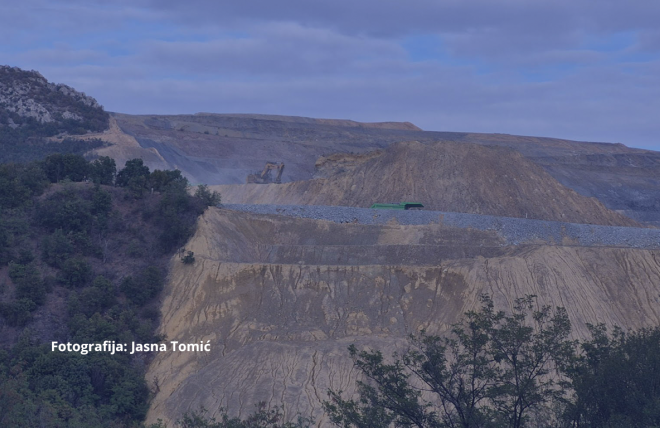
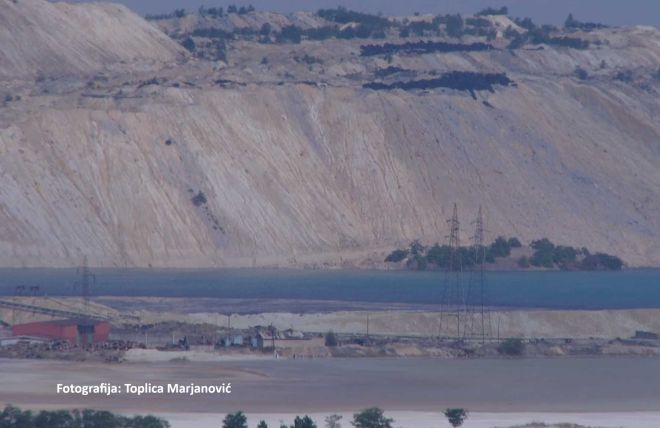
Industrial installations subject to integrated permitting requirements are among the largest individual sources of pollution. In Serbia, more than 150 such installations continue to operate without an integrated permit, while permitting procedures often take years to complete. This situation highlights serious weaknesses in the permitting system and a failure by the competent authorities to enforce existing legislation consistently.
The Draft Law fails to address these problems. A recently published analysis, jointly prepared by the Platform for Social Development and Innovation (CORE) and the Friedrich Ebert Foundation, identifies a significant gap between the stated objectives of the reform and the legislative measures proposed to achieve them. Rather than addressing existing shortcomings, certain provisions of the Draft Law risk creating further problems in practice.
Of particular concern is the fact that the Draft Law allows for derogations from Best Available Techniques (BAT) standards, which constitute the primary mechanism for reducing industrial pollution, without establishing sufficiently clear and precise criteria. This directly increases the risk of arbitrary application of the law.
The proposed provisions also risk reducing public participation to a mere formality. For example, the Draft Law allows only 15 days for the public to comment on complex technical documentation and relies on outdated methods of public notification. Similar shortcomings are evident in the consultation process for the Draft Law itself, with the deadline falling around public holidays and non-working days, further limiting opportunities for public engagement.
Such an approach undermines meaningful participation by citizens, experts and civil society organisations in decision-making processes that directly affect the environment and public health.
Significant shortcomings also remain in the areas of inspection, oversight and enforcement. The proposed framework fails to establish sufficiently clear and effective oversight mechanisms, while existing installations continue to benefit from more favourable treatment than new ones, despite often being among the largest polluters. Without consistent enforcement of the law, including preventing installations from operating without integrated permits and imposing effective sanction, meaningful reductions in industrial pollution are unlikely.
Without clear rules, effective oversight and meaningful public participation, the law risks remaining a dead letter, while people continue to bear the consequences of industrial pollution. Serbia needs legislation that delivers tangible reductions in industrial pollution, rather than merely ensuring formal alignment with European standards.
Coalition 27 and the Platform for Social Development and Innovation call on civil society organisations, experts, the media and citizens to examine the main shortcomings of the Draft Law, remain actively engaged in the legislative process and continue advocating for an open, substantive discussion of effective solutions, even after the formal public consultation period has ended.
The comments and recommendations prepared on the Draft Law are available HERE.
This activity is part of the Green Agenda Navigator project, co-funded by the European Union and implemented by the Belgrade Open School in cooperation with six regional partners: the Aarhus Centre Association, Eco-Team, Eco-Z, the Center for Environmental Research and Information Eko-Svest, Protection and Preservation of Natural Environment in Albania, and CEE Bankwatch Network.